
Litigation in Q1 2026: A strong start to the year
High Court quarterly claim volume up 15% in 2026, with insolvency activity also hitting record levels and professional services claims on the rise.
Against a backdrop of ongoing global uncertainty, which typically takes time to translate into formal disputes, it is worth taking stock of current litigation trends.
Following 2025, one of the busiest years we have recorded, litigation activity has remained elevated. Nearly 2,200 claims were issued in Q1 2026, representing a 15% increase compared with the same period last year. Overall, this marks the busiest first quarter since before 2019.
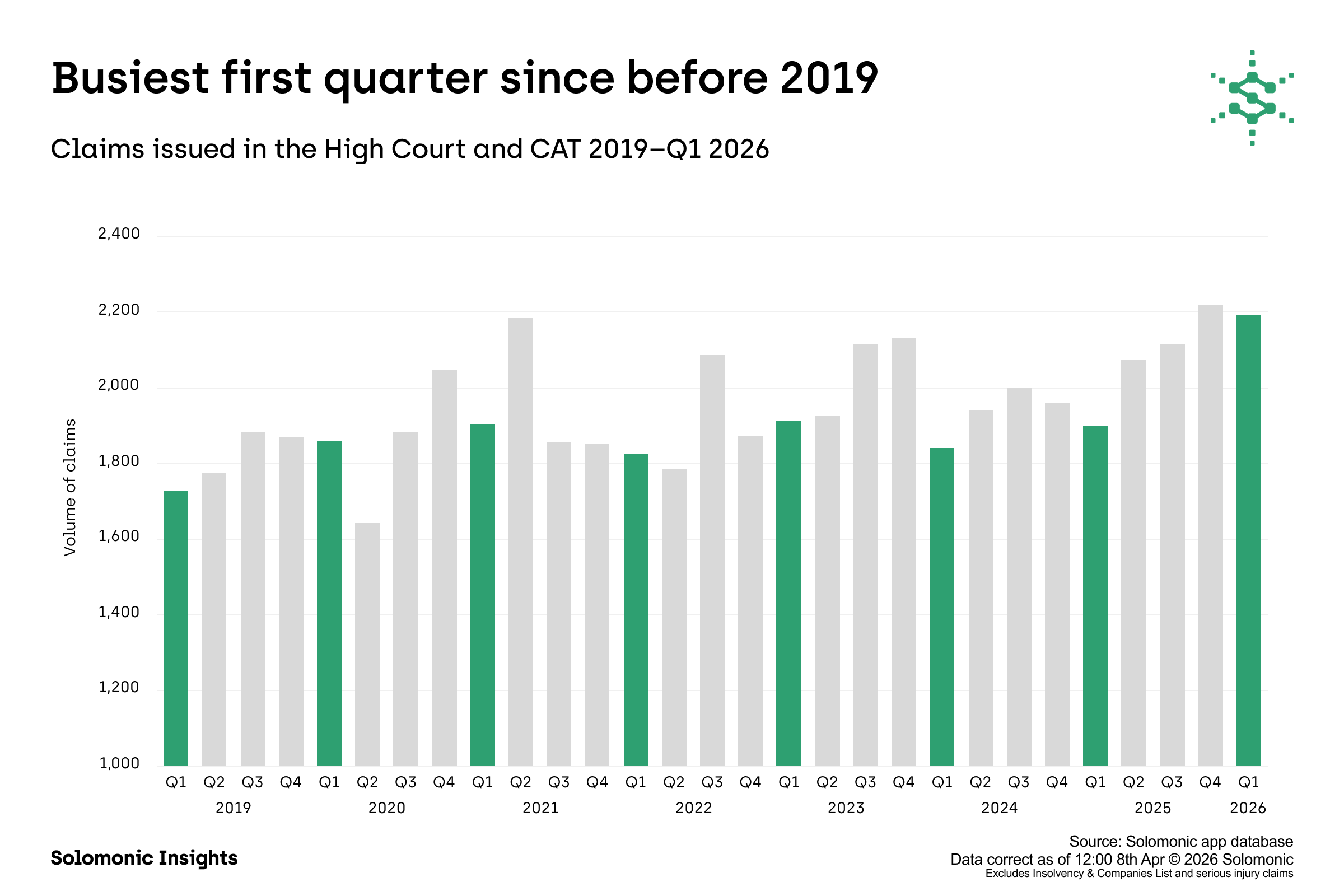
Claims issued in the High Court and CAT 2019–Q1 2026
Commercial Court has busiest start in two years
Despite efforts to reduce their workload of more straightforward cases, the number of new claims issued in the Commercial Court jumped by 71% compared to Q1 2025. Claims also rose quarter-on-quarter, increasing from 100 in Q4 2025 to 144 in Q1 2026, and it was the busiest period since Q1 2024.
At the high-volume end, Probate, Business List and the General King’s Bench continue to account for a significant share of overall claims.
Professional Services attracting more litigation
Looking at what is driving this flow of activity, the professional services sector saw a notable rise, with over 300 claims filed – a 45% increase compared to Q1 2025. In more than half of these cases (54%), the defendant operates in the sector.
The public sector and financial sector also remained among the most active areas. Public sector claims held broadly steady at around 265, while banking and finance sector claims eased slightly compared with the previous quarter. Real estate disputes continue on an upward trajectory, whereas construction and infrastructure activity continues to be volatile.
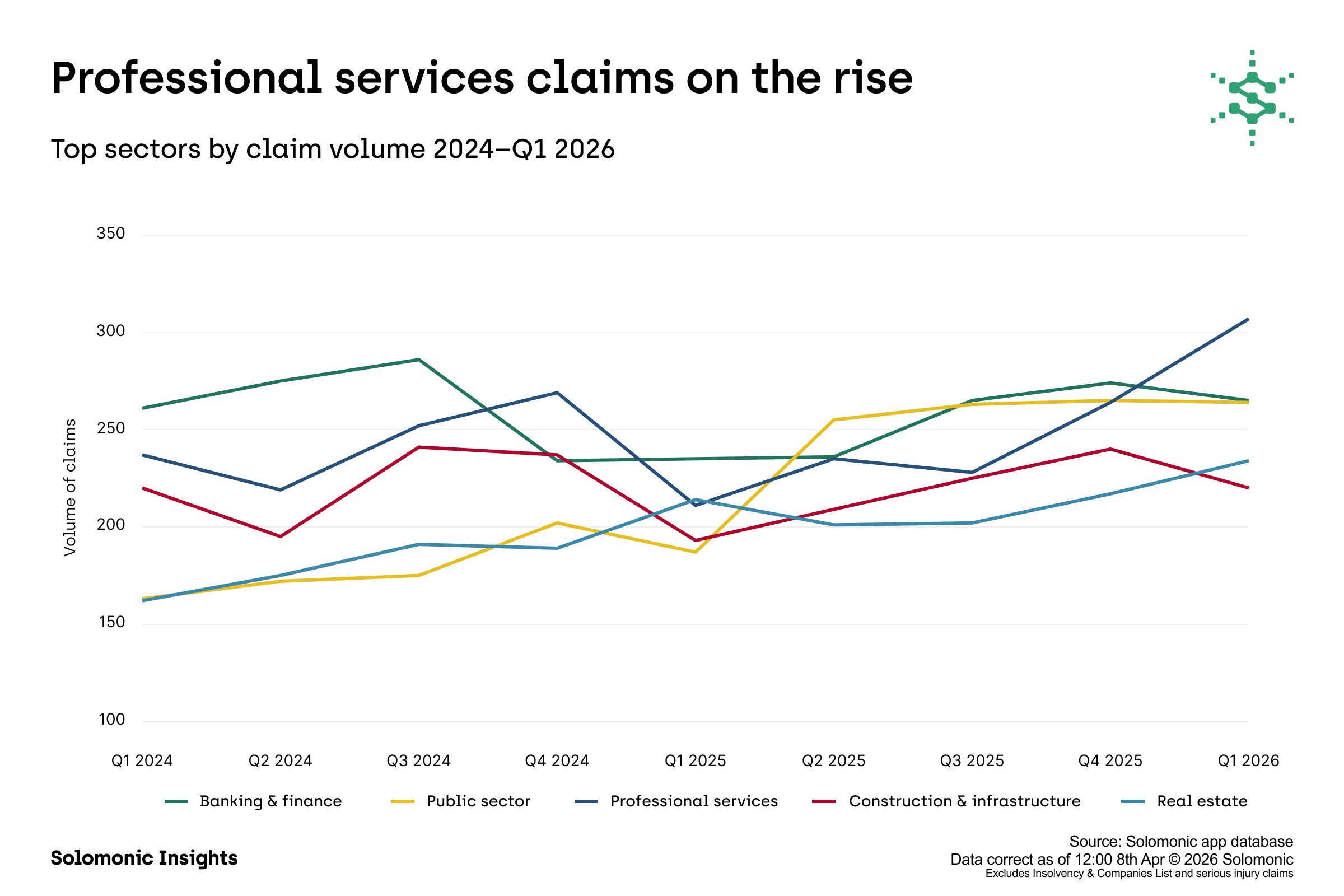
Top sectors by claim volume 2024–Q1 2026
More bad news on insolvencies
While the last quarter of 2025 suggested some optimism about a potential slowdown in the Insolvency and Companies List, Q1 2026 has put that on hold. With more than 4,100 new actions, this is now the busiest period since 2020, suggesting that economic pressures on businesses persist.
Winding-up petitions continue to drive much of this activity, increasing by 12% from Q4 and accounted for over half (53%) of all insolvency filings in Q1, totalling more than 2,170 petitions.
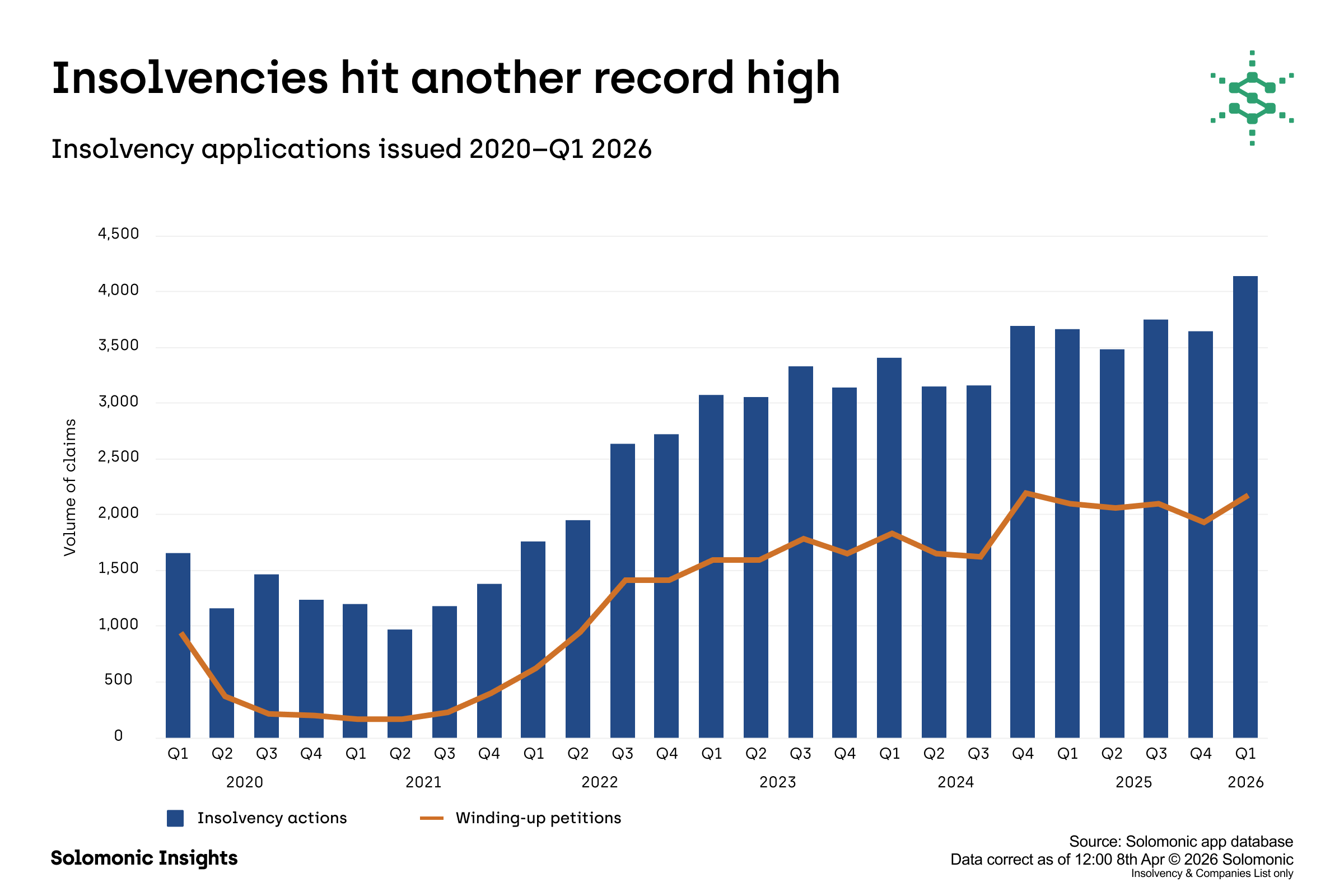
Insolvency applications issued 2020–Q1 2026
Law firm rankings Q1 2026
With a busy first quarter, law firm activity reflects a marked concentration of claims among a relatively small group of firms across the civil courts of England and Wales and the Competition Appeal Tribunal.
On the claimant side, Kesar & Co and Clyde & Co lead with 53 and 27 claims respectively, with Barings close behind on 25 claims. Barings’ total was boosted in large part by a surge of Covid-19 business interruption filings ahead of the March 31st deadline.
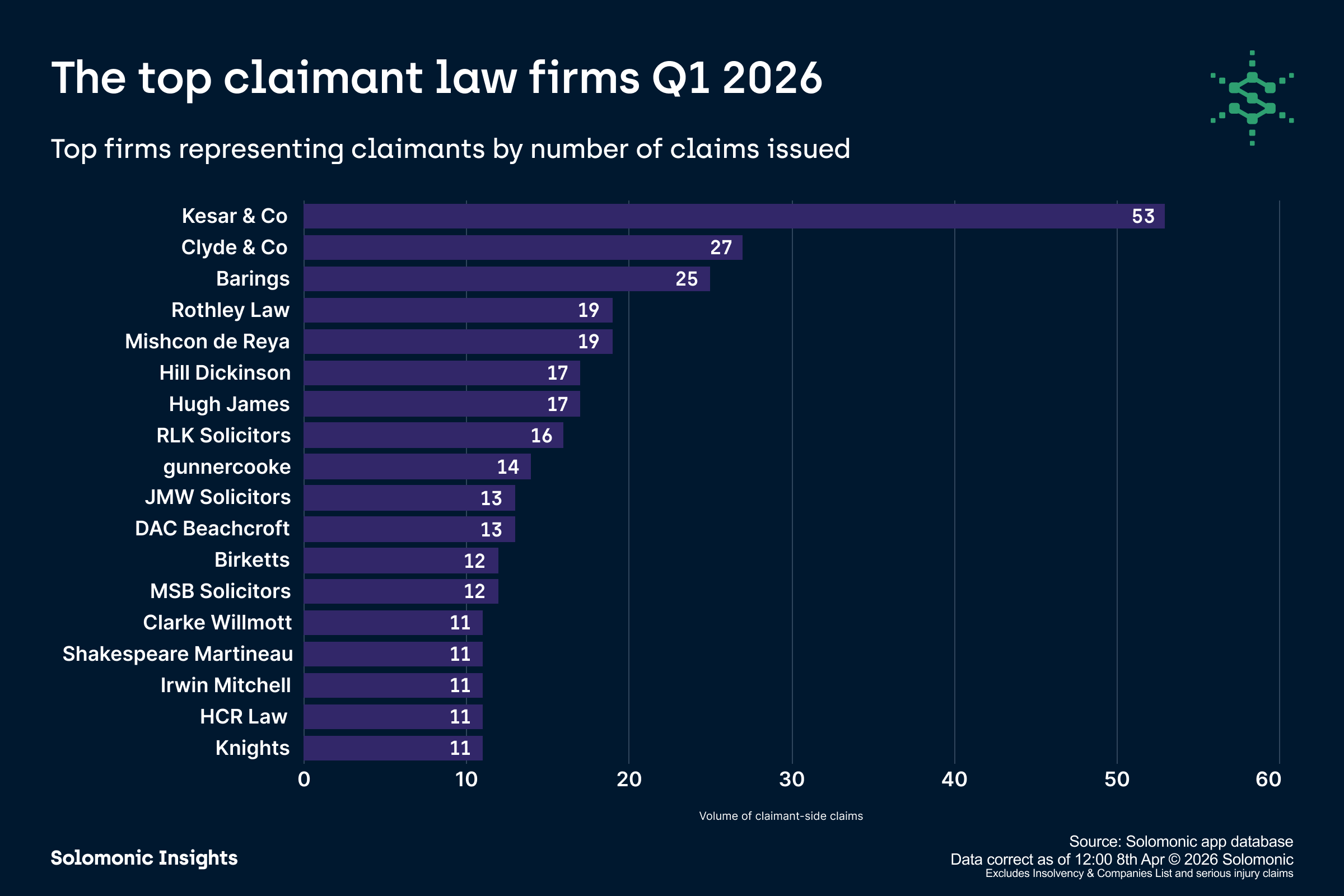
Top law firms representing claimants by number of claims issued in Q1 2026
Defendant-side activity also remains concentrated among leading firms. DAC Beachcroft recorded 20 claims in Q1, with Clyde & Co and Keoghs close behind with 17 claims each.
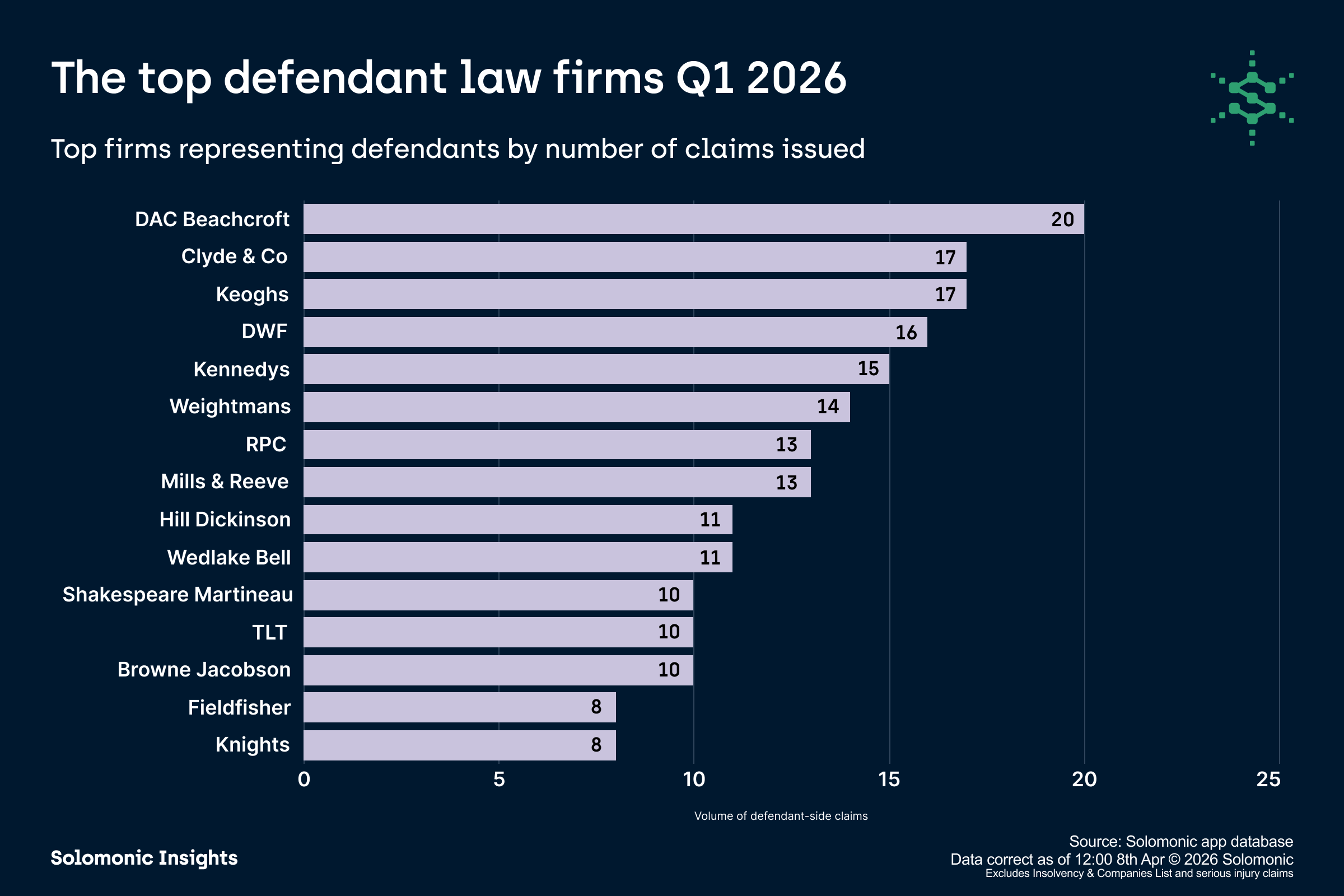
Top law firms representing defendants by number of claims issued in Q1 2026
Looking at overall activity, the top 30 firms reveal who is dominating the claims landscape into 2026.
Kesar & Co recorded the highest number of claims issued, with 53 filings. This was followed by established heavyweights Clyde & Co (44 claims) and DAC Beachcroft (33 claims). While Clyde & Co and DAC Beachcroft are regular leaders in annual rankings, Kesar & Co’s performance stands out as a new entrant, as they issue a raft of claims predominately against the Ministry of Justice (MoJ).
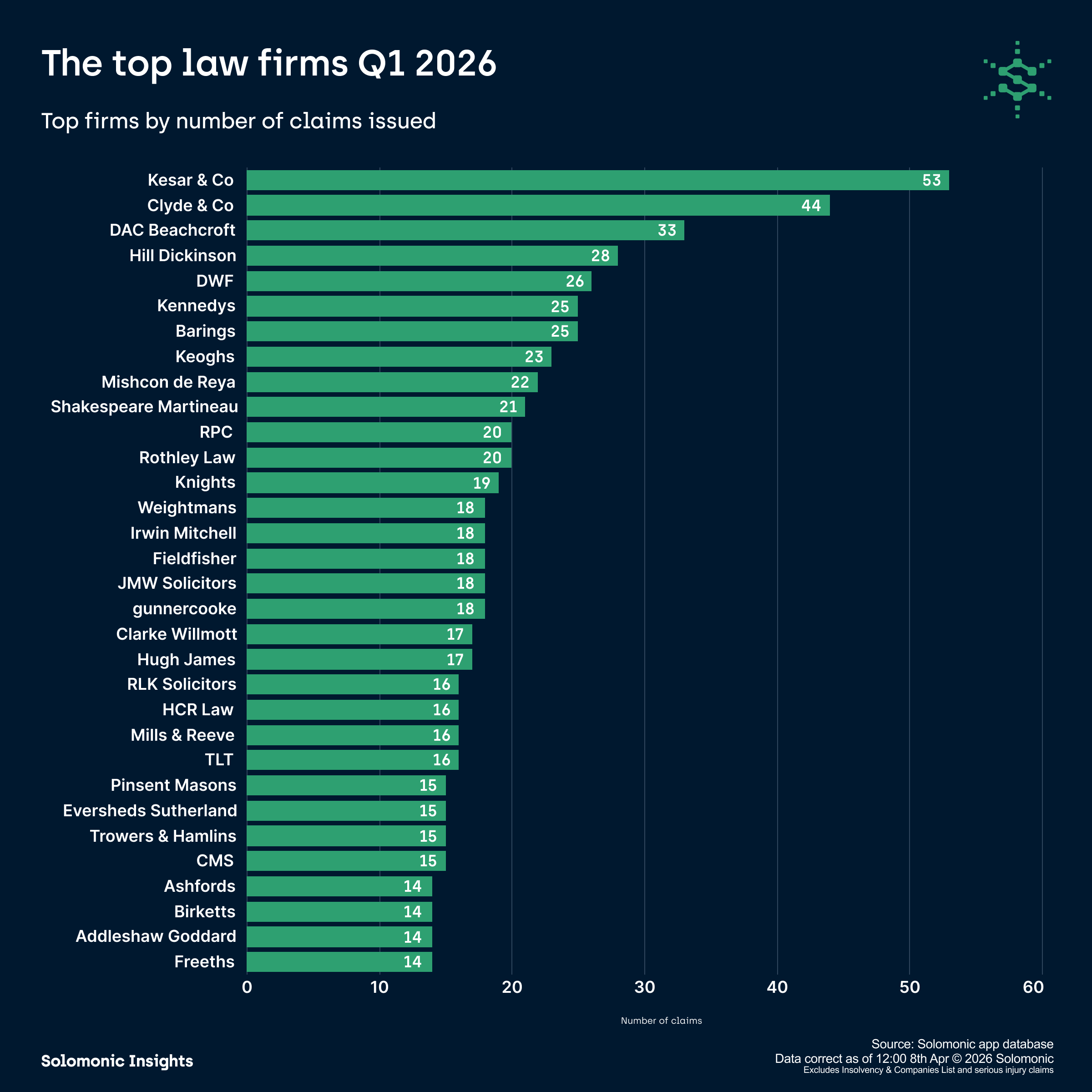
Top law firms by number of claims issued
If you would like to learn more about Solomonic’s award-winning litigation data and analytics, trusted by more than 10,000 practitioners and 60% of the UK’s top 50 litigation firms, please get in touch with us at info@solomonic.co.uk for a confidential introduction to the platform.