
Solomonic Year in Review 2025: A headline-grabbing year in civil litigation
The numbers behind commercial litigation - the leading firms, court activity, practitioner insights and sector trends.
Solomonic, the leading litigation data and analytics platform, has released the fifth edition of its report on commercial litigation trends in the High Court (England & Wales), Competition Appeal Tribunal and - new for this edition – the Court of Appeal.
The report provides an in-depth analysis of significant cases, highlights key areas to monitor and tracks litigation activity by sector. It also ranks the top law firms as well as featuring insights and commentary from leading litigation professionals, offering a comprehensive view of current and emerging trends in the commercial disputes landscape.
“Our platform and reports unearth further insights by revealing trends, patterns and outliers that allow the market to better understand the forces shaping what is surely the most sophisticated and high-quality civil litigation forum around the globe.
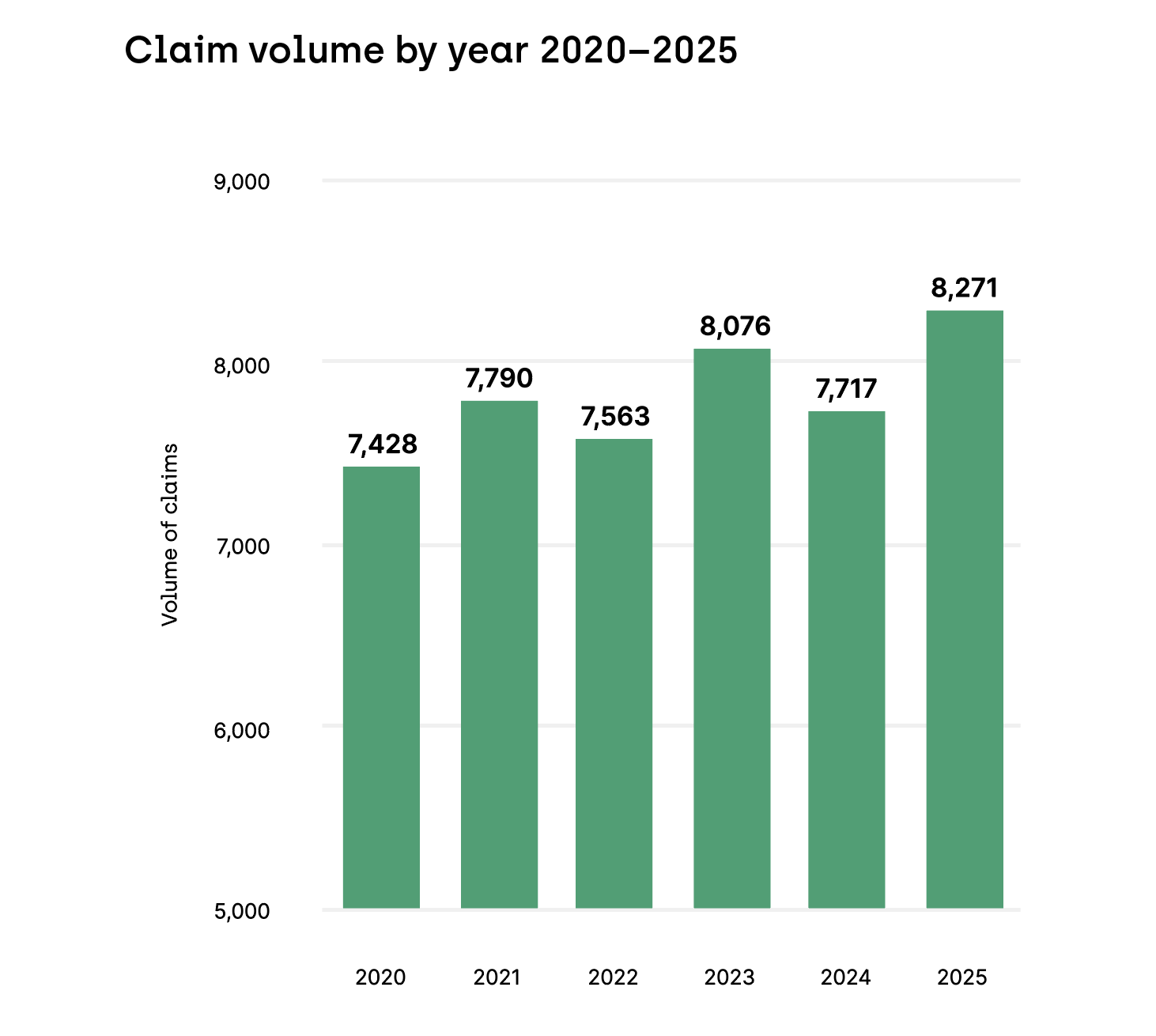
2025 was a notable year in English High Court civil litigation, and not just because claim volumes jumped to the highest levels since before 2020. The year also showcased London as a world leading dispute resolution centre with prominent, high value and significant disputes hitting the headlines,” commented Edward Bird, Solomonic’s CEO.
Headline-grabbing year in civil litigation
Overall, claim volumes were up 7% on the previous year and more than 11% on 2020 — the year Covid struck — all of which suggest the litigation sector is in robust condition. Contributing to that growth was a rise in public sector disputes, up by more than 30%. The property sector was also busy, while, although down a couple of percentage points, the financial sector remains the most dominant.
A steady but meaningful rise in probate cases is also evident as social demographics and economics create an ongoing growth area in disputes.
Insurers took a huge hit
While the Russian invasion of Ukraine continued unabated, aviation leasing claims against insurers rose to prominence as we witnessed the first billion pound plus aviation “mega trial”. The trial, starting in late 2024, of aircraft lessor AerCap Ireland and others, suing their respective insurers (AIG Europe in the lead) for the non-return of aircraft and engines, resulted in success for the lessors and saw an award of over US$1bn as well as a further US$240m in interest. The cost to the insurers generated news headlines on the business pages when the judgment was published in June 2025. With the next round of cases by operators against insurers coming to court in 2026, there is very likely more pain to come for the insurance industry.
Class actions slowed but first big success for an opt-out case
If 2025 began with the reverberations of the PACCAR judgment and a decline in funding for litigation, the Civil Justice Council review brought some relief with what was widely considered to be a well-balanced analysis and set of recommendations. Despite this, new collective action volumes continued to decline, reflecting the lack of funder appetite and poor claimant outcomes. However, the year did end on a positive note for claimants. The success of class representative Dr Rachael Kent in her case against Apple marked the first significant opt-out victory before the Competition Appeal Tribunal. The claim alleged that Apple has overcharged app developers, resulting in higher costs being passed onto consumers. With an estimated value of between £1.1bn and £2.2bn, the case attracted widespread media attention and made headline news in October.
Finally, in December, the Government, perhaps aware of the policy challenges it cannot afford to otherwise address in the competition area, announced that it would bring legislation forward to remedy the issue with funding agreements that the PACCAR decision created. With this and Dr Kent’s success, 2026 may see a return to higher funding flows.
Liability established in massive Brazil dam case
If the aviation leasing claim values weren’t big enough, then the Mariana dam collapse certainly broke records. Estimated at around £36bn, the case involved critical issues of liability under Brazilian law and saw the claimants, representing over 600,000 individuals, succeed at first instance. A trial to determine the quantum is scheduled for 2026, though the first decision has been appealed.
AI copyright case doesn’t answer all the questions creatives had been hoping for
Not all the big cases had big numbers attached to them. Perhaps one of the most important cases for owners of intellectual property, and specifically creative content, saw Getty Images take on Stability AI, a UK text to image AI company. Alleging copyright infringement among other things, the case was expected to be the first true test of copyright protection against AI training which learns from otherwise protected material.
Unfortunately for the wider creative industry and IP content generators, the case didn't really address the issue but turned on secondary copyright and trademark issues. Nevertheless, the case still holds valuable lessons for content creators.
New Covid-19 business interruptions cases slow despite looming end to limitation period
The other big driver of insurance cases in recent years was the pandemic. Predominantly focused on business interruption, claim volumes continued to decline in 2025, despite the end of the limitation period coming up in the first half of 2026. Though new claims have declined, there remains a significant chunk (168 in 2025) of ongoing disputes still making their way to resolution.
No end in sight to economic pain as insolvencies continued in record numbers
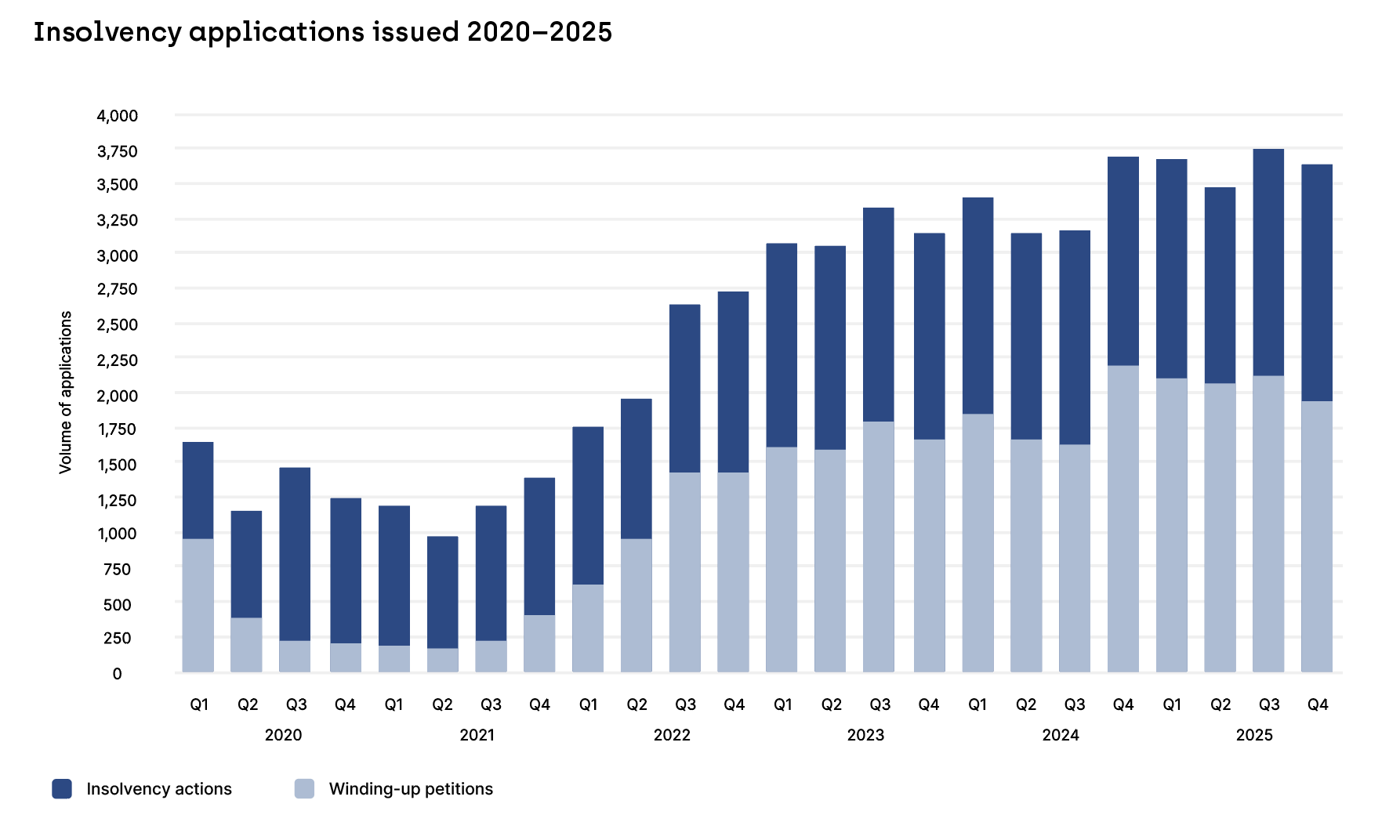
Activity in the Insolvency and Companies List is, of course, of particular interest to practitioners in the area, but it also serves as a leading indicator of economic distress. In this regard, 2025 was a bad year, with winding-up petitions up over 10% on the previous year. However, there was some sign of the trend slowing, with the final quarter of 2025 seeing a welcome decline.
Court service held its own in the face of hugely busy post-Covid period
It is certainly well known that the courts have faced a substantial issue since Covid in dealing with the volume of claims issued and requiring resolution. While the civil High Court has not seen quite the same backlog as in the criminal courts, it nevertheless remains a substantial challenge.
Solomonic data suggests cases are being dealt with effectively, with only a small indication of an upward trend in the volume of active claims.