
In 20 of 50 recent Permission to Appeal orders held by Solomonic, the Court of Appeal treated the challenged decision as a matter of judicial discretion and said it would only interfere in limited circumstances: 16 of the 20 were refused.
Permission to appeal is the gateway to the Court of Appeal. Solomonic now holds more than 500 Court of Appeal Permission to Appeal (PTA) orders, since January 2025, obtained directly from the court. They are not available through the court’s tracker tool. Every order is full-text searchable in Solomonic’s Document Search Tool and linked, in the Court of Appeal Module, to the first-instance claim.
This analysis looks at 50 recent orders (handed down between 15 June to 9 October 2026): the grounds raised, reasons given, authorities cited and who made the decision. It is a snapshot, not a representative sample of the 500+ orders and does not cover the applications, the judgments below (in the lower court) or any later appeal. The reasons behind each grant or refusal show how the court tests an application, which is crucial intelligence for a practitioner when drafting grounds or advising a client.
What grounds of appeal are described?
Over half of the applications alleged an error of law (31 of 50 orders), followed by procedural complaints (24) and challenges to findings of fact (14). The categories overlap, and ten orders gave limited detail or challenged only the judge’s discretion.
A clearer pattern emerges in what the court said. In 20 orders the court treated the decision in the lower court as a matter of discretion or case management, such as a split-trial direction or an extension of time and the wording varied from “plainly wrong” to “outside the generous ambit” (the range of decisions a reasonable judge could make) to “very unlikely to interfere”.
16 of the 20 were refused. In Bourlakova and others v Kazakov and another (CA-2026-001463), five grounds against split-trial and related directions all failed. In one of the four where permission was granted, Undritz (as administrator of Novellas St Clemens) v d’Amico Tankers DAC (CA-2026-001251), an extension of time “would usually be a matter for the judge”, but the appellant judge found that striking out a claim for a short delay was arguably disproportionate.
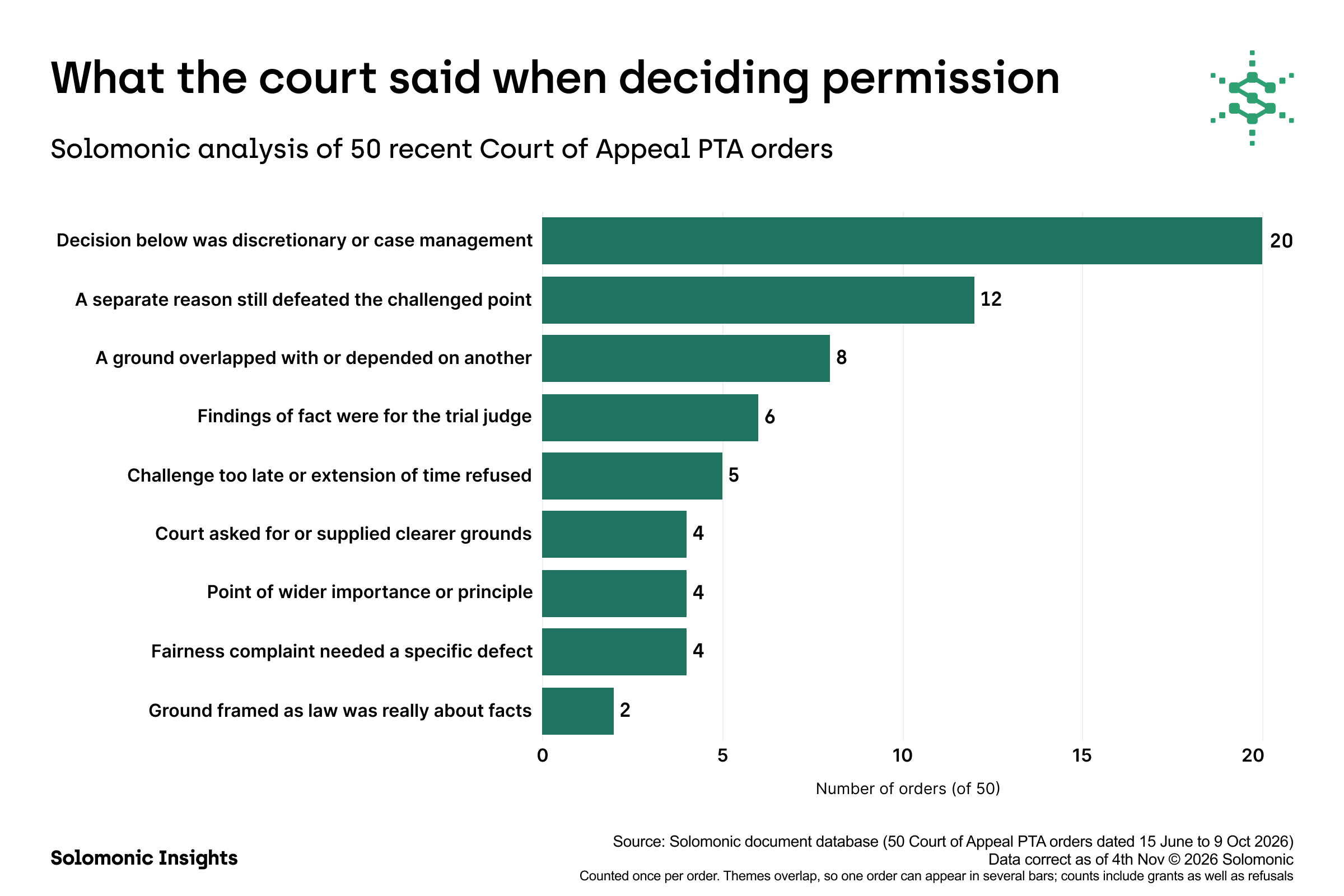
Figure 1. What the court said when deciding permission. Themes overlap; one order can appear in several bars.
The court also looks at how grounds relate to each other. In eight orders a ground was found to overlap with or depend on another and in four the court asked for, or itself supplied, a clearer statement of the grounds. In R (Dr Rehiana Ali) v General Medical Council (CA-2025-003234), four jurisdiction grounds were permitted and four others refused, three expressly because they added nothing. In 12 orders the court found another reason a ground would fail even if clearly stated (e.g. in Picker v TEW (CA-2026-001473)).
Which cases are cited most often?
Named cases appear in only 14 of the 50 orders, so at least from this brief analysis there is no definitive league table of authorities. Denton v TH White, the leading relief from sanctions case, is the only name to recur, in three orders; the other 28 appear once each. Two of them show how a familiar authority’s role turns on the setting: an unless order “did not attract the Denton principles” in Zaika Frozen Food Ltd v Zurich Insurance Co Ltd and another (CA-2025-002866), while in Farnell v Hunt (CA-2025-003103) the court endorsed the judge’s cautionary application of the three-stage test. The wider 500+ document set might reveal a more definitive list of most cited cases.
Who decided and how the orders were ruled
Of the 49 orders determining permission, 32 refused it, 12 granted it and five were granted it in part. In only one instance was it deferred to an oral hearing. These are permission decisions, not appeal results or an appeal success rate for the court.
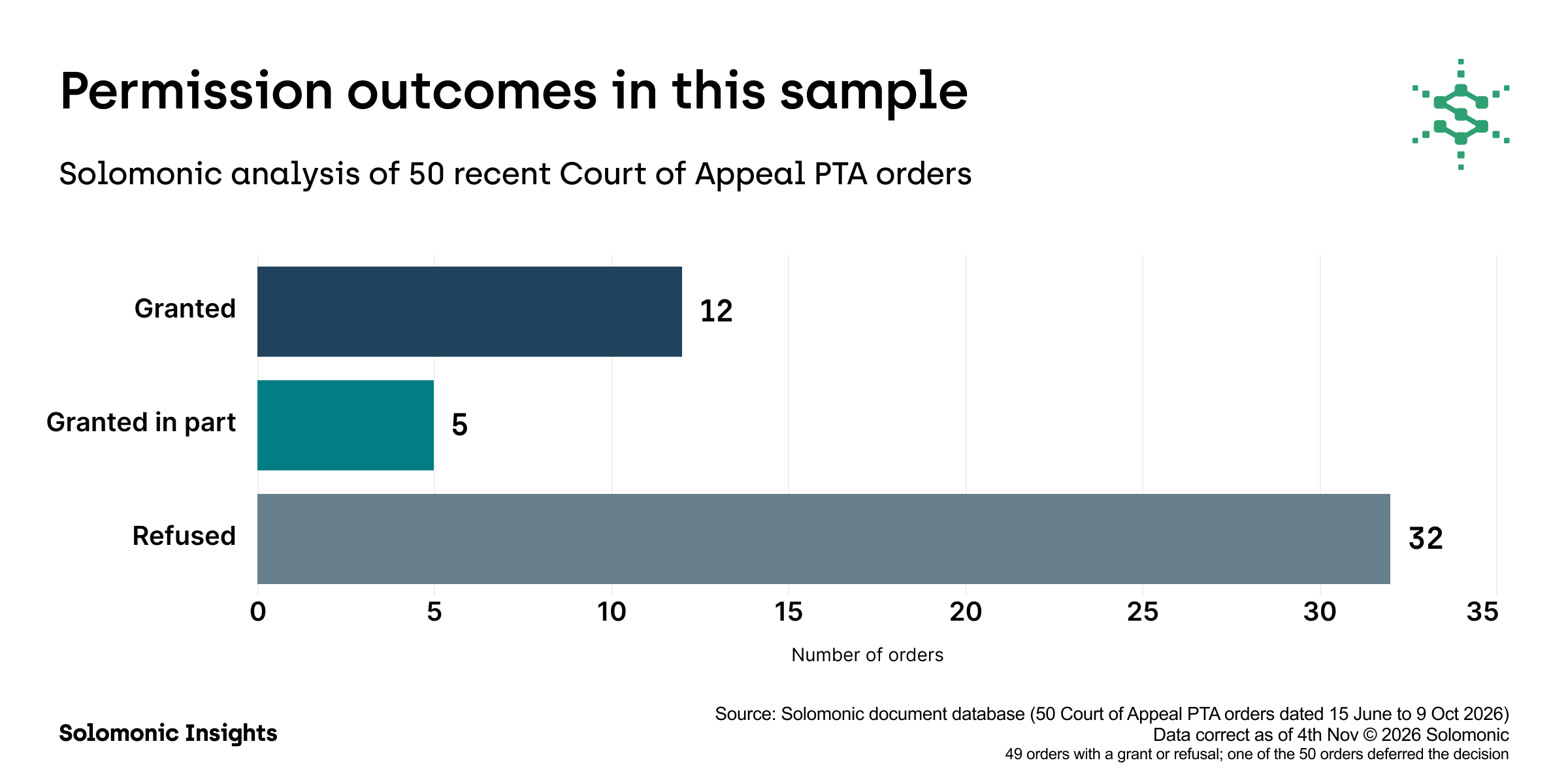
Figure 2. Outcomes for the 49 orders that decided permission.
Seventeen judges decided the 50 orders, with one to eight each. Three had at least five: Lady Justice Asplin refused eight, Lord Justice Miles seven and Lord Justice Males granted four of six. Counts alone cannot explain the outcomes and 50 orders are too few to compare judges' reasoning. What they do reveal is who is deciding these applications and how often, so a practitioner can find and research a judge’s earlier orders in Document Search.
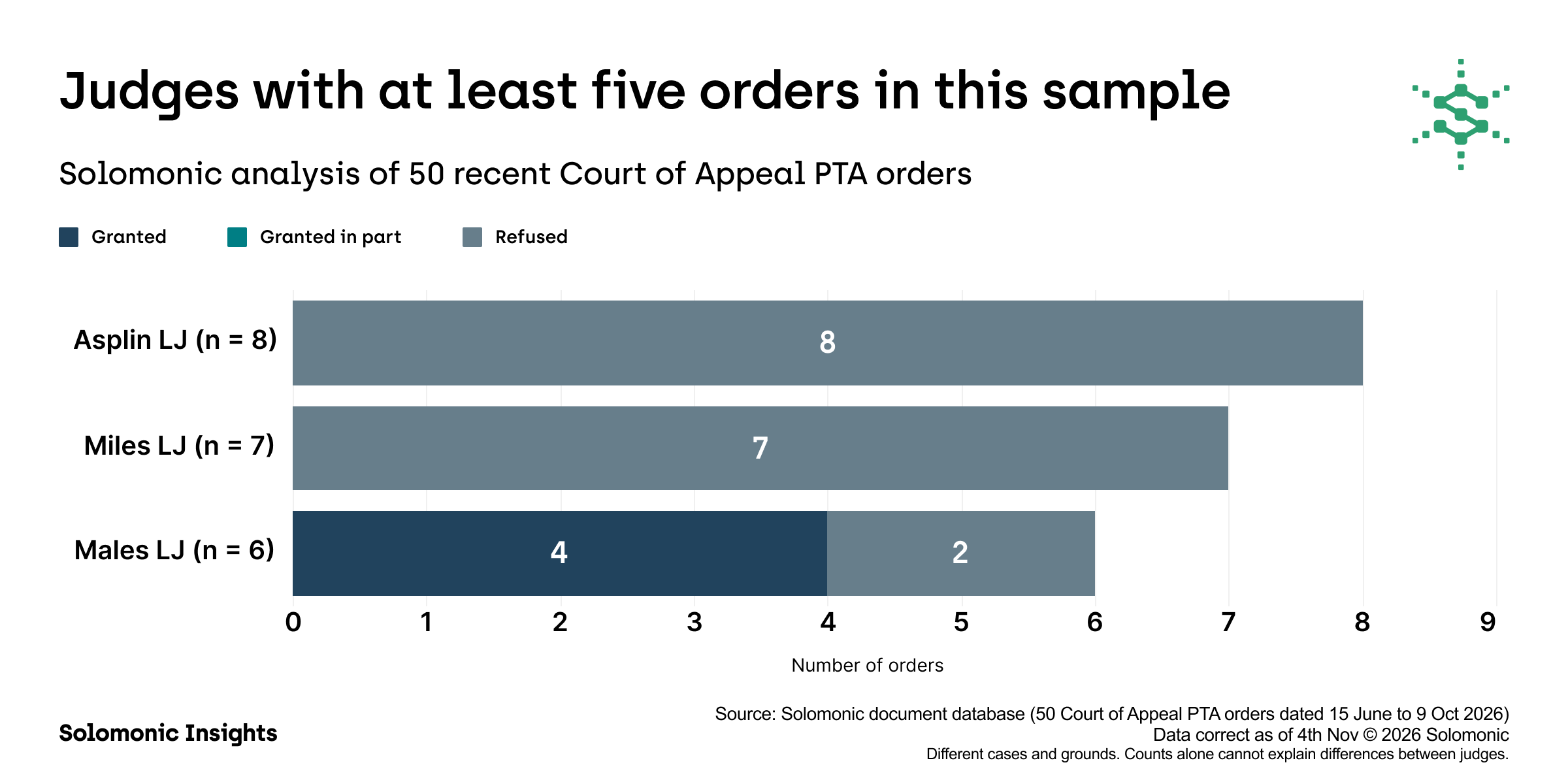
Figure 3. Judges with at least five orders. Cases and grounds differed; counts alone cannot explain why.
Some benefits for practitioners
See how the court treats similar appeals. Use Document Search for orders in the same procedural setting as your appeal, such as an unless order or an extension of time, and read how the court framed the test and what crossed it.
Know who is making decisions. See which judges are deciding permission applications and read their earlier orders.
Follow the appeal to the claim. The Court of Appeal Module links each order to its first-instance claim and can alert you when appeals are lodged in key cases..
Solomonic users can access this and intelligence about appeals with the Court of Appeal Module.
About this analysis: the 50 most recent PTA orders available in Solomonic’s data on 4 November 2026, dated 15 June to 9 October 2026, read and coded with AI assistance and checked against the orders by legal analysts. Counts are orders, not grounds, and categories overlap. Some orders arise from related litigation. No time trend is implied. These are permission decisions only, not the outcome of any appeal.
If you would like to learn more about Solomonic’s award-winning litigation data and analytics, trusted by more than 12,500 practitioners and 60% of the UK’s top 50 litigation firms, please get in touch with us at info@solomonic.co.uk for a confidential introduction to the platform.